


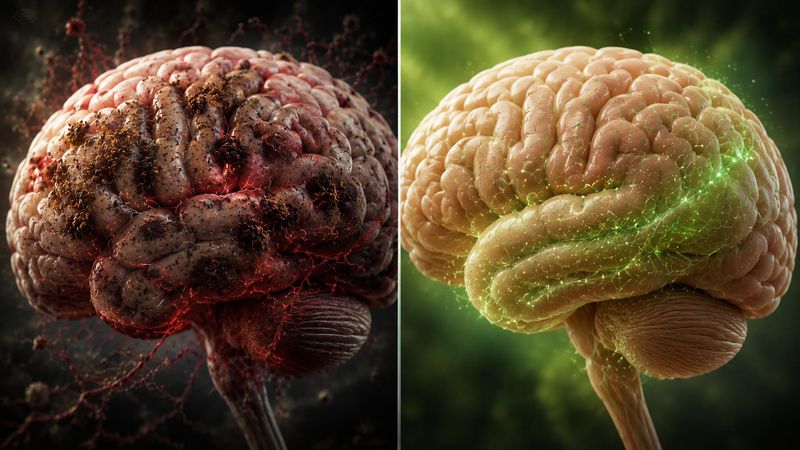
The Overlooked Trace Element
Why lithium is probably essential for the brain — and what a deficiency does
A popular-science essay on the state of research into lithium as a possible essential trace element: from the landmark Nature paper out of Harvard (2025), through the inflammation hypothesis of psychiatry, to the mixed clinical-trial record of 2026. The argument rests on the primary literature; the far-reaching overarching thesis of the physician Michael Nehls is treated throughout as one — contestable — interpretation among several, and measured against the sources. Each bracketed number is a clickable link to its entry in the reference list.
There is a short but telling episode in the history of everyday medicine. Until 1950, Americans consumed lithium as a matter of course: the lemon-lime soda known today as 7Up launched in 1929 as "Bib-Label Lithiated Lemon-Lime Soda," spa waters advertised their lithium content, and in many pharmacies the lightest of all metals sat on the shelf as a mild tonic.[26] In 1949 the U.S. Food and Drug Administration banned lithium in foods — during the same period in which a lithium-based salt substitute was poisoning heart patients and the Australian psychiatrist John Cade described the mood-stabilizing effect of high doses of lithium in mania.[26] Ever since, the element has worn two faces: at high doses a potent but monitoring-intensive psychiatric drug — in trace amounts a possible nutrient whose status remains officially unresolved to this day.
It is precisely that vanishingly small amount that concerns us here — the amount found in drinking water, in vegetables, in fish — and the question of what happens when it is missing. For a long time this was a fringe question in nutritional science. Since the summer of 2025 it no longer is: a paper out of Harvard has placed the decades-old suspicion that lithium might be indispensable for the brain on a new footing.[1] It is the best starting point from which to order the evidence.
The finding that changed the debate
In August 2025 the group led by Bruce Yankner at Harvard Medical School published a study in Nature that did what decades of correlational data could not: it set out a causal chain from lithium to Alzheimer's, in four linked steps.[1]
First, that the deficiency is real and early. The team measured about thirty metals at once in brain tissue from a large aging cohort (the "Rush Memory and Aging Project") and an independent replication sample. Of all of them, only lithium was altered — and it was already depleted at the stage of mild cognitive impairment, before dementia begins. The shortfall was confined to the brain: in blood serum, patients and healthy controls did not differ, which is one reason it had gone unseen for so long.[1]
Second, where the lithium goes. It is not excreted but trapped. The amyloid plaques of Alzheimer's — the protein clumps that accumulate between nerve cells — bind lithium and hold it, and the plaque-bound fraction climbs as the disease advances while the surrounding tissue is drained. The plaques act as a sponge.[1]
Third — the pivotal step — that the shortage itself does the damage, not merely the plaques that create it. To show this, the researchers lowered brain lithium in mice by a route that has nothing to do with amyloid: a lithium-poor diet. The deficiency alone reproduced the disease — accelerated plaques, tau pathology and memory loss — and even healthy old mice with no Alzheimer's predisposition grew forgetful. Because the lithium was removed by diet rather than by plaques, this isolates the deficiency as a cause in its own right. It works through the enzyme GSK-3β, which the missing lithium leaves overactive, and through the microglia — the brain's clean-up cells — which it disables, so that yet more amyloid builds up and traps yet more lithium: a self-reinforcing loop.[1]
Fourth — and this is the step that reframes everything that follows — that the chemical form of lithium decides whether it can help at all. Ordinary lithium carbonate is itself bound by amyloid; in a plaque-rich brain it is a poor delivery vehicle, because the plaques seize it before it reaches the depleted tissue. Screening sixteen lithium compounds, the team found one — lithium orotate — that amyloid does not grab, so it stays available. At doses about a thousand times below those used in psychiatry, lithium orotate prevented roughly seventy percent of plaque formation in older mice, restored the connections between nerve cells and largely reversed their memory loss. Carbonate, at the same dose, did not.[1][3]
Two features lift this from a laboratory curiosity to a claim about human health. The effective dose lay in the nutritional range, not the pharmacological one, and the deficiency it corrects is an everyday one — together enough to turn a long-standing suspicion, that a chronic lithium shortage feeds into Alzheimer's, into something testable.
Yankner states the consequence carefully: "The idea that lithium deficiency could be a cause of Alzheimer's disease is new and suggests a different therapeutic approach."[1] The physician-scientist Eric Topol, reviewing the work, is more guarded still: the causal proof stands in mice, the correct human dose is unknown, and without a controlled trial no one should self-medicate.[2]
What "essential" means — and whether lithium qualifies
"Essential" is a strictly defined term in nutritional science. A substance earns it only if the body cannot make it itself and its absence reproducibly causes illness — as has long been established for vitamins, iron or iodine. The Leipzig animal-nutrition researcher Manfred Anke formulated testable criteria for this as early as 1984: the deficiency must impair growth, reproduction or lifespan; the disturbance must appear in at least three animal species; and it must disappear once the substance is supplied again and return upon renewed withdrawal. Mere usefulness is not enough.[11]
For lithium, exactly such withdrawal experiments exist. In feeding studies across several generations, a lithium-poor diet markedly reduced litter size, birth weight and the survival rate of the young in rats; the authors of one of these works explicitly concluded that lithium is an essential element.[26] Anke's own investigations in goats over fifteen generations showed, under lithium-poor feeding, a many-fold increase in miscarriages and a drastically elevated mortality among the young compared with adequately supplied control animals — accompanied by skin changes and susceptibility to infection that point to a disturbed immune defense.[11] With that, the core of the Anke criteria is met: deficiency harms, supplementation repairs the harm, reproducibly across species.
A second piece of evidence comes from the distribution of lithium in the body. It is not stored at random but apparently in a demand-regulated way: its concentration in key organs, above all the hippocampus, remains remarkably stable despite fluctuating intake.[13] And in the laboratory, lithium extends the lifespan of the roundworm C. elegans by up to thirty-six percent — an indication that its action is deeply anchored in biology and not confined to higher animals.[17] The evolutionary anchoring, too, argues for significance: the enzymes lithium acts upon are preserved almost unchanged across all the major groups of living things — from bacteria through plants and fungi to animals.[26]
The official assessment nonetheless remains cautious. In 2016 the World Health Organization classified lithium as a "potentially toxic element with possibly essential functions" — a compromise that acknowledges the suspicion but leaves the proof in humans open.[12] The physician Michael Nehls, in his book The Conspiracy Against Lithium, condensed these indications into six connected arguments for essentiality and goes further than the cautious specialist literature; his pointed overarching interpretation is taken up again below.[26] But the solid core — withdrawal studies per Anke, demand-regulated distribution, evolutionary conservation — stands independent of any single interpretation.
But why should a deficiency arise at all in modern societies? The geological answer is simple: over billions of years lithium has been leached from soils and concentrated in the sea; seawater contains roughly a hundred times more of it than fresh water.[26] On a widely held evolutionary reading, humans developed their large brains on the lithium-, iodine- and omega-3-rich coasts of Africa; the spread inland to nutrient-poorer soils, and later the heavily processed modern diet, would have caused intake to fall. This is plausible but hard to prove — a framework, not hard evidence.[26]
The mechanism: two enzymes, one network
Why can a single, chemically simple ion act in so many ways? The answer lies in two enzymes that lithium inhibits in physiologically relevant amounts.
The most important is glycogen synthase kinase 3 (GSK-3) — the very enzyme whose disinhibition triggered the damage in the Harvard study. Kinases are enzymes that steer other proteins by attaching a phosphate group to them, thereby switching them on or off — one of the basic control knobs of every cell. GSK-3 does this to an extraordinary number of partners; more than a hundred such target proteins are known, which is why it ranks among the most influential kinases of all.[8] For its work it requires a magnesium ion in its active site, and this is where lithium intervenes: the chemically very similar, only slightly larger lithium ion can displace the magnesium and thereby brake the enzyme. A vivid image for this — magnesium as the accelerator, lithium as the brake — captures the matter: lithium does not switch GSK-3 off but holds it at a healthy idle.[8]
An overactive GSK-3 is anything but harmless. It overloads the tau protein with phosphate groups — whose clumping is a hallmark of Alzheimer's disease; it drives inflammatory processes; it disrupts the internal clock; and it blocks the cell's self-cleaning.[7] The second target, inositol monophosphatase (IMPase), supplies the cell with inositol, a basic building block of important signaling molecules; inhibiting it dampens overactive signaling pathways — the classic "inositol-depletion hypothesis" of lithium's action.[7]
Because GSK-3 has so many target proteins, its inhibition manifests in a whole series of measurable, individually well-documented effects. Lithium promotes the formation of new nerve cells and raises the growth factor BDNF; it activates telomerase, the enzyme that renews the protective caps at the ends of the chromosomes and slows cellular aging; it stimulates autophagy, the controlled digestion and recycling of damaged cell components.[7][10] This breadth has a remarkable consequence, widely discussed in the specialist literature: a single drug tailored to one molecule — say a synthetic GSK-3 inhibitor — can scarcely reproduce this entire web of effects. Nehls coined the term "lithiome" for it, the whole network of lithium target structures; independent of the choice of word, the pharmacological observation is real that the broad reach of an element is hard to replace with a single agent.[26]
When inflammation attacks thinking
One particular strand of lithium's action concerns the immune system — and here two initially separate lines of research converge, casting the element in a new light.
The first comes from psychiatry itself. Edward Bullmore, professor of psychiatry at the University of Cambridge, popularized a thesis in his book The Inflamed Mind (2018) that long counted as an outsider position: in depression, inflammation is not merely an accompanying phenomenon but can be its cause.[4] Inflammatory signals from the body reach the brain and alter mood, drive and behavior. Bullmore's most-quoted estimate is that inflammation is likely to matter for about a third of depression patients — roughly a third show elevated inflammatory markers in the blood and may be depressed because of this inflammation, rather than because of a disturbed serotonin balance. Conversely, about a quarter of people with inflammatory diseases such as rheumatoid arthritis develop depression.[4]
The strongest evidence for this comes from experiments in which inflammation is induced and mood is measured. Patients who receive interferon-alpha to treat hepatitis or a melanoma — a drug that deliberately triggers inflammation — develop clinical depression in twenty to fifty percent of cases. Healthy volunteers given a typhoid vaccination or a small amount of bacterial endotoxin react within hours with low mood and social withdrawal, the magnitude of the mood change tracking the rise in inflammatory messengers. In the British birth cohort "Children of the 90s," elevated interleukin-6 levels in nine-year-olds predicted a higher risk of depression and psychotic experiences in late adolescence — a temporal ordering that argues for cause rather than mere coincidence. And in the other direction: the TNF-blocker infliximab improved depressive symptoms in a controlled trial, but specifically in patients with high inflammatory values at baseline.[4] Bullmore assigns these findings a trans-diagnostic rank and sees inflammatory components in schizophrenia, bipolar disorder and Alzheimer's as well.[4]
The second line of research concerns lithium itself — and it intervenes at precisely the junction that drives Bullmore's cascade. The molecular route from inflammation into the brain runs through the microglia: their danger sensor TLR-4 activates GSK-3, which sends the control switch NF-κB into the cell nucleus, where it turns on the genes for inflammation-promoting messengers such as interleukin-6 and TNF-α.[5] And these very messengers inhibit the formation of new nerve cells. Because lithium brakes GSK-3, it intervenes in the middle of this cascade: it dampens the NF-κB-driven inflammation and calms activated microglia.[5] It also has a long-standing, clinically exploited immune effect: through the same signaling pathway it increases the production of white blood cells — the leukocyte count typically rises by thirty to forty-five percent — which is why it is used against certain forms of neutropenia, for example under the antipsychotic clozapine.[6]
With that, a picture takes shape: if inflammation does indeed contribute to a substantial share of mental illnesses — as Bullmore and immuno-psychiatric research suggest — then a body's own element that brakes precisely this inflammation at its molecular junction becomes, at a stroke, highly interesting. It is exactly this connection that Nehls has condensed into his guiding metaphor: he describes the lifelong formation of new nerve cells in the hippocampus — adult neurogenesis — as a kind of "mental immune system" that carries psychological resilience, and its inflammation-driven throttling as a form of "immunodeficiency." That the formation of new hippocampal neurons matters for memory and mood, and that the hippocampus shrinks in depression, chronic stress and Alzheimer's, is established neuroscience.[7] The interpretation of this neurogenesis as an immune system is Nehls's own, powerful framing — a mental image that vividly links the immunological and the neurodegenerative findings, but which goes beyond strict scientific usage.[26]
For all its coherence, a caveat is due: the direction of lithium's cytokine effects is not always uniform in detail. In some cell experiments lithium raised individual inflammatory messengers rather than lowering them; the net anti-inflammatory balance holds above all for chronic intake and for living tissue.[5] Lithium is thus not a simple anti-inflammatory but a regulator that nudges an over-revving system back toward equilibrium.
Is there a lithium deficiency in the population?
If lithium is essential and its absence harms the brain, this ought to show up in population statistics as well. The natural lithium content of drinking water varies considerably by region, and since the 1970s a series of studies has linked low values to poorer psychological and health indicators.
The chemist Gerhard Schrauzer found more suicides, homicides and crimes in Texas counties where the water contained little lithium.[15] An Austrian investigation reported in 2011 that a natural lithium content in the water higher by ten micrograms per liter was associated with a suicide rate lower by a good seven percent.[16] A Japanese study from Oita Prefecture with around 1.2 million inhabitants linked higher water values — the range ran from 0.7 to 59 micrograms per liter — to lower all-cause mortality, an effect that persisted even after accounting for the suicide rate.[17] And a Danish study of more than 73,000 dementia patients found a lower dementia risk at moderate lithium concentrations in the water.[18]
Striking as these findings are in sum, they demand scientific caution, because they are correlations: they show that two quantities occur together, not that one causes the other. A large U.S. analysis of 174 counties covering 4.2 million people illustrated this exemplarily: in 2018 it too initially found an apparent protective effect — which, however, vanished as soon as one corrected for age, education and medical care. The authors attributed the association to such hidden confounders.[19] From drinking-water statistics alone, then, causation cannot be inferred. That is precisely why the 2025 Harvard work is so significant: it supplies the mechanism that pure statistics could not, turning a bundle of correlations into a plausible causal chain.[1]
How much lithium does a human need?
No official recommendation for lithium intake exists, but there are well-founded estimates — and the numbers are revealing. Daily intake from food, depending on diet and region, lies roughly between 100 and 500 micrograms, i.e. one-tenth to one-half of a milligram; the WHO cites an order of magnitude of about 100 micrograms.[12][14] The most lithium is supplied by shellfish and crustaceans, legumes, grain products and mineral-rich water; the least by heavily processed foods.[14] From withdrawal and intake balances, Schrauzer derived a provisional recommendation of about one milligram of elemental lithium per day for an adult — a figure that lies above the actual intake of many people. Herein lies the possibility of a creeping, unnoticed deficiency.[13]
Decisive for understanding is the distinction between dose ranges, because it separates the nutrient from the drug and clears up the widespread misconception that "lithium" is fundamentally a high-potency substance with a narrow safety window.
In the nutrient range, about one to five milligrams of elemental lithium per day suffice, as offered in dietary supplements in the form of lithium orotate. For orientation: ten milligrams of lithium orotate contain only about 0.4 milligrams of elemental lithium. This amount barely raises the blood level measurably and lies far below any threshold for side effects.[9]
In the medicinal range, by contrast, about 120 milligrams of elemental lithium per day are given to treat bipolar disorder — in the form of 900 to 1,200 milligrams of lithium carbonate, with target blood levels of 0.5 to 0.8 millimoles per liter. That is roughly a hundred times the nutrient amount and, because of its proximity to the toxic threshold, requires close monitoring of kidney and thyroid values.[8]
Between these two worlds lie orders of magnitude. The safety margin between the estimated requirement of about one milligram and the threshold of adverse effects is considerable — a fact that often confuses the debate, because the notorious side effects concern exclusively the high-dose medicinal range. Even so, caution remains warranted: as Topol emphasizes, the right dose for any protective effect in humans is simply unknown; the widespread 5-to-10-milligram supplements could just as easily be too low as sufficient. Without controlled trials, every dosage figure remains an estimate.[2]
What the clinical trials actually show
Here serious science parts from wishful thinking, and this essay would be dishonest to gloss over a human record that is, at best, mixed. But the fourth step above — the one about the chemical form — changes how that record must be read.
Every controlled trial of low-dose lithium in cognitive decline so far has used lithium carbonate, the form the Harvard work singled out as the one amyloid captures. A Brazilian trial in 2013 (Nunes and colleagues) gave 113 Alzheimer's patients a microdose of 300 micrograms a day and saw them hold steady over fifteen months while the placebo group declined.[21] Two trials from Orestes Forlenza's group (2011 and 2019), in people at the pre-dementia stage, used subthreshold carbonate and found lower levels of the harmful tau protein in the spinal fluid, with cognition preserved over two years.[20] The largest and strictest trial to date, LATTICE (Gildengers and colleagues, JAMA Neurology, March 2026), gave eighty people with mild cognitive impairment low-dose carbonate — about 195 mg a day, a subthreshold blood level — for two years, and came out formally negative: not one of six primary endpoints reached significance, with only a non-significant hint that verbal memory declined half as fast under lithium as under placebo.[22]
Read through the mechanism, that record is not the letdown it first seems. A trial that feeds carbonate to a plaque-laden brain is testing precisely the form Harvard flagged as poorly delivered, so a weak or null result is close to what the mechanism predicts — and it says little about whether lithium helps, only about whether this salt reaches its target. On that reading, LATTICE is not a verdict against lithium; it is a verdict against carbonate as the vehicle.
Honesty forbids pushing that line too far, because carbonate is plainly not inert. At therapeutic doses it measurably increases grey-matter and hippocampal volume on MRI — in bipolar patients and even in healthy volunteers — and it lowered spinal-fluid tau in Forlenza's own trials.[27] Lithium clearly reaches the brain and does real work there. The Harvard claim is narrower, and fully compatible with this: in the particular setting of an amyloid-filled brain, carbonate is a compromised carrier while orotate is not. Carbonate can thicken grey matter across the brain and still be the wrong tool for delivering lithium into the plaque-depleted tissue of Alzheimer's — the two statements do not collide.
What remains, then, is a single sharp gap rather than a refutation. A meta-analysis of six controlled trials in 435 patients (Kishi and colleagues, 2025) confirmed that conventional lithium produces no significant cognitive benefit, and concluded pointedly that trials should now test lithium orotate;[23] an editorial argues the same.[25] Yet the one experiment the Harvard work most directly demands — low-dose lithium orotate against Alzheimer's in humans — has never been run. The nearest ongoing trial, MIXLI at King's College London, does test orotate, but in depression rather than dementia.[24] Until that gap is closed, the honest verdict is not "lithium failed" but "the decisive form of lithium has not yet been tried."
Why the element was overlooked for so long
That leaves the question of why so obvious a candidate stood at the margin of research for decades. One structural explanation is uncontested and requires no conspiracy assumption whatsoever: lithium is an element and therefore cannot be patented. For a cheaply available, freely imitable substance, the commercial incentives are simply lacking for the large, expensive clinical trials that approval would require. That, of all things, a publicly funded piece of basic research from Harvard — not a pharmaceutical corporation — delivered the 2025 breakthrough fits this picture, and is hardly surprising.[1]
Michael Nehls turns this into a far sharper thesis, the one that gives his book its title: the neglect of lithium was not an oversight but was actively pursued, because recognizing an unpatentable essential nutrient would devalue the development of patentable imitator agents — such as synthetic GSK-3 inhibitors. This interpretation is contestable and should be read as opinion, not as established fact; Nehls overextends it in places into cultural-critical and political-topical territory that has nothing more to do with the biochemistry of lithium. The sober core behind it — a lack of economic incentives for researching an element — remains untouched by that, and is shared even by researchers who do not endorse Nehls's further conclusions.[26]
The overall picture: an element that must be taken more seriously
Put the pieces together and a remarkably coherent picture emerges — and it comes not from a single source but from the interplay of several independent lines of research. Immuno-psychiatry around Bullmore shows that a substantial share of mental illnesses is co-caused by inflammatory processes.[4] Biochemistry shows that lithium intervenes as a brake precisely at the molecular junction of this inflammation — the enzyme GSK-3 — while simultaneously promoting the formation of new nerve cells.[7] Animal-nutrition research around Anke shows that a lithium deficiency meets the criteria for essentiality.[11] Epidemiology around Schrauzer and others shows statistical associations between low lithium and higher rates of suicide, violence and dementia.[15] And the 2025 Harvard work adds the decisive, long-missing piece: a causal mechanism demonstrated in an animal model.[1] Nehls's contribution lies less in original empirical work than in having linked these scattered findings early and pointedly into an overall picture — an overall picture one must read critically at its edges, but whose center is increasingly covered by independent studies.[26]
What is still missing is the last, decisive proof: a large, cleanly controlled study showing that the right form of lithium at the right dose halts cognitive decline in living humans too. The previous studies with lithium carbonate remained ambiguous, in part negative — but they used, as we now know, possibly the wrong compound.[1] The reticence of official nutritional science, which does not list lithium as essential to this day, is understandable against this background; equally understandable is that the burden of proof has shifted noticeably toward essentiality in recent years.
Lithium is thus, with good reason, a candidate for the longest-overlooked essential trace element in humans — an element whose everyday deficiency may have been misread for generations as "normal aging," as the "widespread disease of depression," as the "fate of dementia." Whether that holds true will be decided by the studies of the coming years, above all the outstanding tests of lithium orotate in humans. Until then, the appropriate stance is neither euphoria nor rejection, but that of an alert, well-informed interest in one of the lightest — and perhaps most severely underestimated — building blocks of life.
Reference
[1] L. Aron, B. A. Yankner et al., "Lithium deficiency and the onset of Alzheimer's disease," Nature (6 August 2025). nature.com/articles/s41586-025-09335-x. Context: Harvard Medical School; NIH Research Matters.
[2] Eric Topol, "Lithium and its potential protection against Alzheimer's" — expert appraisal with caveats on extrapolation to humans. erictopol.substack.com
[3] Lay-accessible summary of the mouse results, AARP. aarp.org
[4] Edward Bullmore, The Inflamed Mind: A Radical New Approach to Depression (2018) — on the "one-third" share of inflammation-associated depression, interferon-alpha, endotoxin challenge and infliximab. Cf. The Inflammatory Hypothesis of Depression, Focus (APA).
[5] "Lithium, Inflammation and Neuroinflammation — A Narrative Review," Int. J. Mol. Sci. (2024). mdpi.com
[6] D. Focosi et al., on lithium-induced leukocytosis via GSK-3/HIF-1 and G-CSF, Journal of Leukocyte Biology (2009). pubmed.ncbi.nlm.nih.gov/17906701
[7] Review literature on lithium and neuroprotection at subtherapeutic concentrations (preclinical Alzheimer's models), PMC. pmc.ncbi.nlm.nih.gov/articles/PMC12065699
[8] Shim, Berglund & Yu, "Lithium: An Old Drug for New Therapeutic Strategy for Alzheimer's Disease and Related Dementia," Neurodegenerative Diseases (2023). pmc.ncbi.nlm.nih.gov/articles/PMC10227915
[9] Pacholko & Bekar, "Lithium orotate: A superior option for lithium therapy?," Brain and Behavior (2021). pmc.ncbi.nlm.nih.gov/articles/PMC8413749
[10] "The Neuroprotective and Longevity Potential of Low-Dose Lithium," Healthspan research review (autophagy, telomeres, GSK-3). gethealthspan.com
[11] M. Anke et al., work on the essentiality of trace elements and lithium withdrawal studies in goats and rats, University of Leipzig (from 1984).
[12] World Health Organization, Trace Elements in Human Nutrition and Health / WHO assessment 2016: lithium as "possibly essential," dietary intake ~100 µg/day.
[13] G. N. Schrauzer, "Lithium: Occurrence, Dietary Intakes, Nutritional Essentiality," Journal of the American College of Nutrition (2002) — provisional recommendation ~1 mg/day.
[14] K. Gillman, "Lithium in Diet and Body," psychotropical.com — dietary content, intake (~0.1–0.5 mg/day), blood and drinking-water levels. psychotropical.com
[15] G. N. Schrauzer & K. P. Shrestha, "Lithium in drinking water and the incidences of crimes, suicides, and arrests," Biological Trace Element Research (1990).
[16] N. D. Kapusta et al., "Lithium in drinking water and suicide mortality," Austria (2011): +10 µg/L ≈ 7.2% lower suicide rate.
[17] Ohgami et al. (2009), Oita cohort (~1.2 million inhabitants, lower all-cause mortality at higher water lithium); Zarse, Terao, Ristow et al., "Low-dose lithium uptake promotes longevity in humans and metazoans," European Journal of Nutrition (2011), incl. C. elegans +36% lifespan.
[18] L. V. Kessing et al., "Association of Lithium in Drinking Water With the Incidence of Dementia," JAMA Psychiatry (2017). jamanetwork.com
[19] Counter-finding: W. Parker et al., U.S. analysis of 174 counties (4.2 million adults), JAMA Psychiatry (2018) — no protective effect after accounting for confounders. alzforum.org
[20] O. V. Forlenza et al., subtherapeutic lithium studies in mild cognitive impairment, British Journal of Psychiatry (2011 and 2019): reduced CSF phospho-tau, cognitive stability maintained over two years. pubmed.ncbi.nlm.nih.gov/21301855
[21] M. A. Nunes, T. A. Viel, H. S. Buck, microdose lithium (300 µg/day) in Alzheimer's dementia, Current Alzheimer Research (2013) — no MMSE decline over 15 months.
[22] A. Gildengers et al., LATTICE study: "Low-Dose Lithium for Mild Cognitive Impairment: A Pilot Randomized Clinical Trial," JAMA Neurology (online 2 March 2026) — formally negative on all six primary endpoints, non-significant trend in verbal memory (0.69 points/year, p = 0.05), good tolerability. jamanetwork.com. Context: Being Patient.
[23] Kishi et al., "Lithium for Alzheimer's disease: Insights from a meta-analysis" (6 RCTs, 435 patients; no significant cognitive benefit of conventional lithium; recommendation to test lithium orotate), Neuroscience & Biobehavioral Reviews (2025). sciencedirect.com
[24] MIXLI study, King's College London (lithium orotate, feasibility/proof-of-concept trial in depression; cognition as a secondary endpoint). kcl.ac.uk/research/mixli
[25] Editorial by S. Cakir on lithium and neuroprotection, Turkish Journal of Clinical Psychiatry (2025). journalagent.com
[26] Michael Nehls, The Conspiracy Against Lithium: The Suppressed Essential Nutrient and its Benefits for Mental Health. Source for the historical episode (7Up, the 1949 FDA ban), the metaphors of the "mental immune system" and the "lithiome," the six essentiality arguments, and the (contestable) thesis of active neglect; the primary findings referenced therein were, wherever possible, checked against independent sources.
[27] G. J. Moore et al., "Lithium-induced increase in human brain grey matter," The Lancet (2000) — an ~3% increase in cortical grey matter after four weeks of therapeutic (carbonate) lithium; corroborated by later MRI meta-analyses and by prefrontal grey-matter increases in healthy volunteers on lithium. Lancet / ScienceDirect; healthy-volunteer VBM study (PMC).
Note: This essay is for information and does not replace medical advice. Lithium is a bioactive substance even at low doses; any intake should be medically supervised — especially with existing kidney or thyroid disease or the concurrent use of other medications.